Written in by More Playables production team
Choosing a Playable Mechanic for Puzzle Games
Compare match, sort, merge, and block interactions by comprehension, feedback, state cost, and the promise being tested.
Mechanic selection framework; no campaign-performance claim
Updated
Choose the action that proves the promise
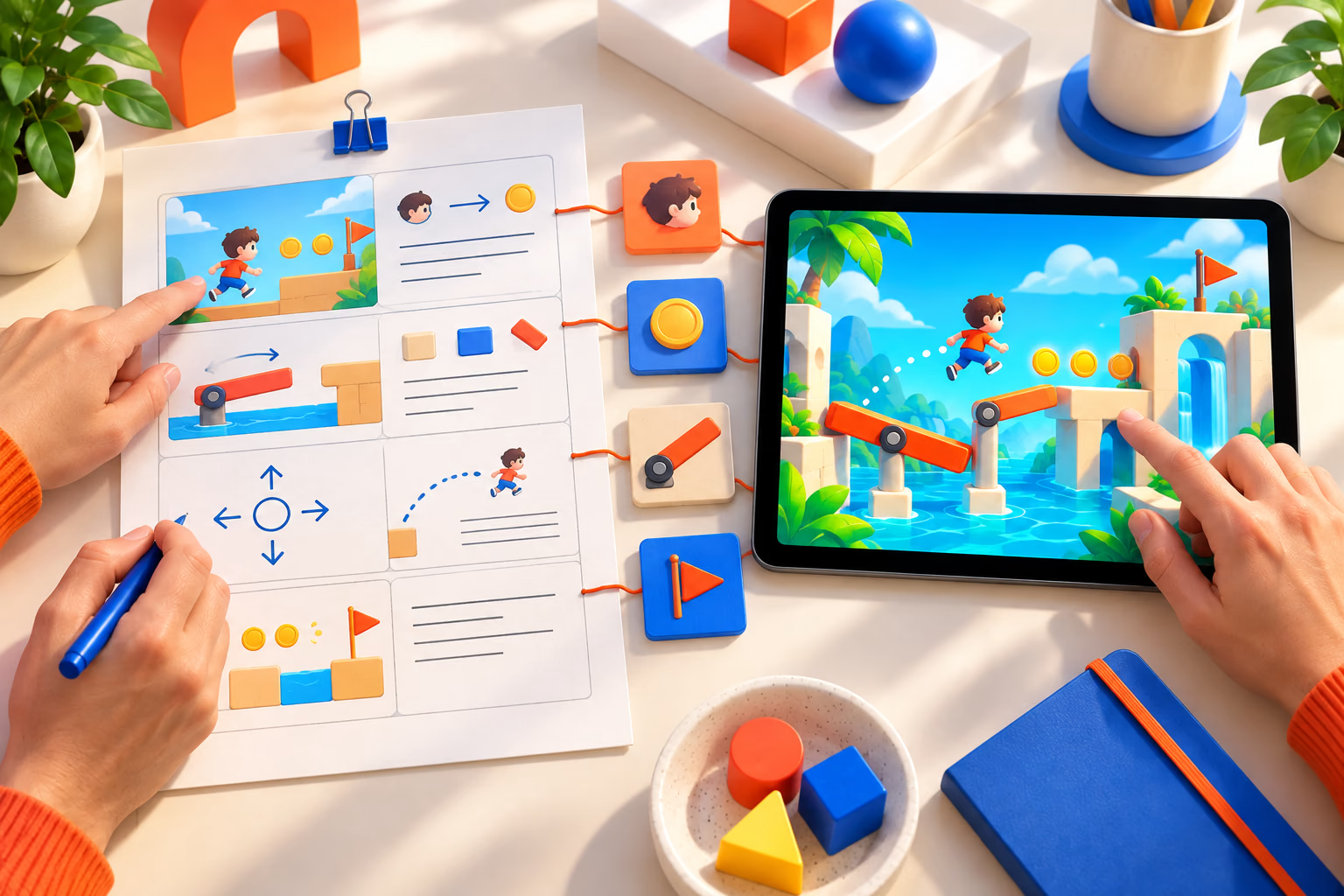
A puzzle playable should not use a familiar mechanic only because it is easy to build. Choose the input and state change that most directly communicates the creative hypothesis and can be understood in the available time.
Mechanic | Immediate input | Design strength | Common risk |
|---|---|---|---|
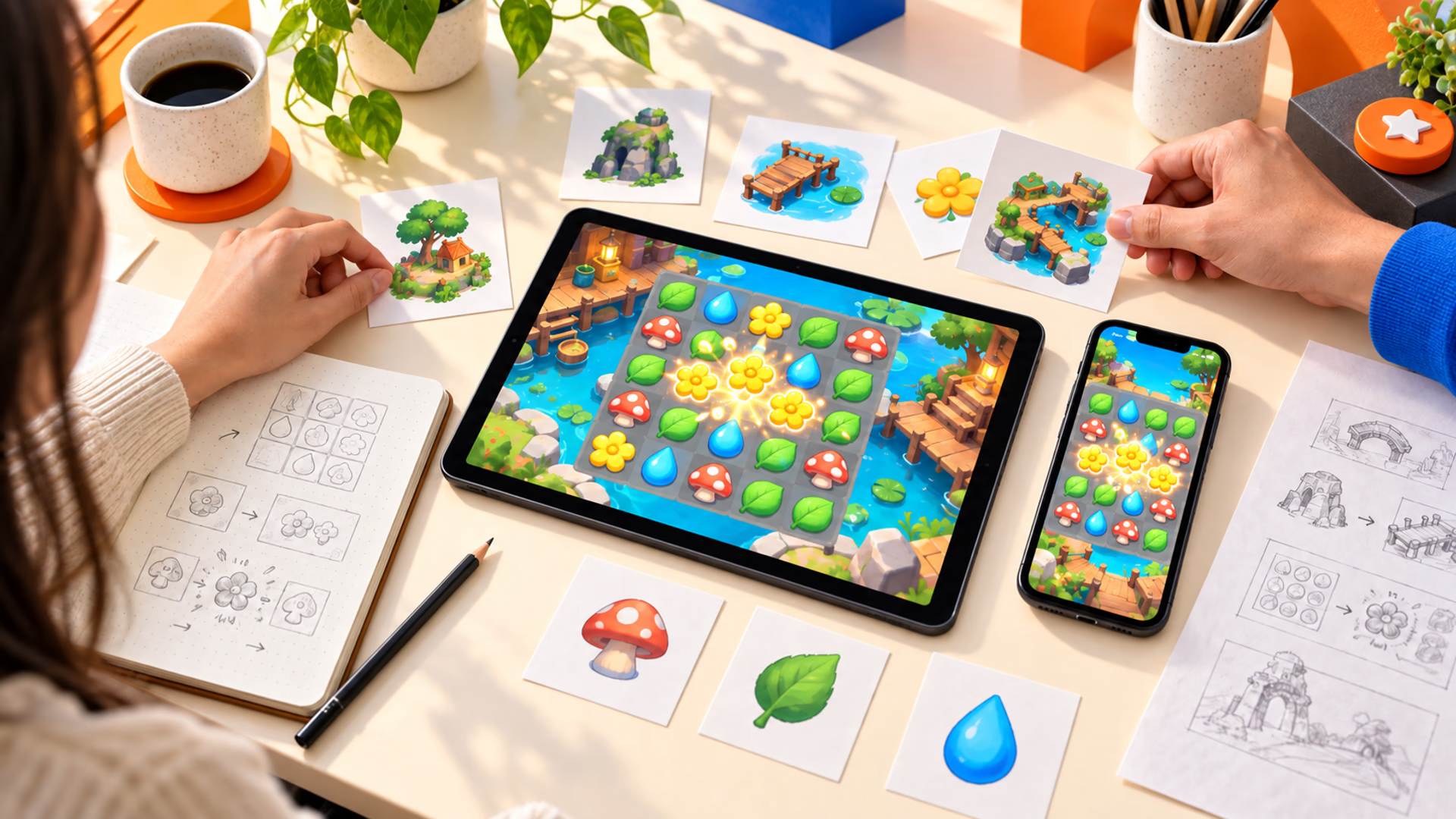
Match | Tap or swap related pieces | Familiar objective and fast visual feedback | Board readability and accidental complexity |
Sort | Drag items to destinations or groups | Clear ownership and satisfying order | Too many categories or ambiguous targets |
Merge | Combine equivalent items | Visible transformation and progression | Long chain or unclear eligibility |
Block/traffic | Move pieces through spatial constraints | Strong consequence and relief | First legal move is hard to discover |
Measure time to understanding qualitatively before campaign launch
Show the opening state to people unfamiliar with the project and ask what they think the objective and available action are. Observe the first input and misunderstanding without coaching. This is usability evidence for the build, not a prediction of market performance.
Design the first move
- Limit competing affordances.
- Make the target and movable object visually distinct.
- Prefer feedback in the game world over a long text instruction.
- Allow recovery from harmless mistakes where the concept permits.
- Make progress visible after the first correct action.
Difficulty should serve the test
An impossible or deceptive board can provoke attention but may damage comprehension or expectation. An effortless board can maximize completion without showing genuine interest. Define what the first-board difficulty is meant to reveal and create controlled settings if difficulty is the variable.
Use the owned examples responsibly
The More Playables gallery contains owned playable work, including puzzle examples such as Color Block Jam and Coin Sort. The visible interaction can illustrate mechanics. It does not reveal campaign metrics, client approval details, or production rationale unless those records are explicitly published with the example.
When a mechanic change creates a new master
Changing sorting copy or first-board difficulty can be a variant. Replacing sorting with merging changes the core input, state model, and creative promise enough to count as another master.
Explore the owned playable gallery and brief the exact mechanic through the playable design stage.
Sources
Put this into practice
- Owned playable examples
Inspect existing mechanics and interaction patterns.
- Playable design service
Turn the selected mechanic into an approved state plan.
Make your next test playable
Turn a creative question into a scoped playable, variant set, and delivery plan.
Start a playable brief